
A drainage grate is installed over a drainage channel or inlet to allow surface water to enter the drainage system while helping prevent large debris from entering the channel.
Ductile iron drainage grates are commonly used in areas where the drainage system may be exposed to traffic, weather, impact, and repeated use.
Typical applications include:
The grate and frame form an important part of the drainage inlet. The correct design should be selected according to the installation environment, dimensions, expected traffic, drainage requirements, and applicable standards.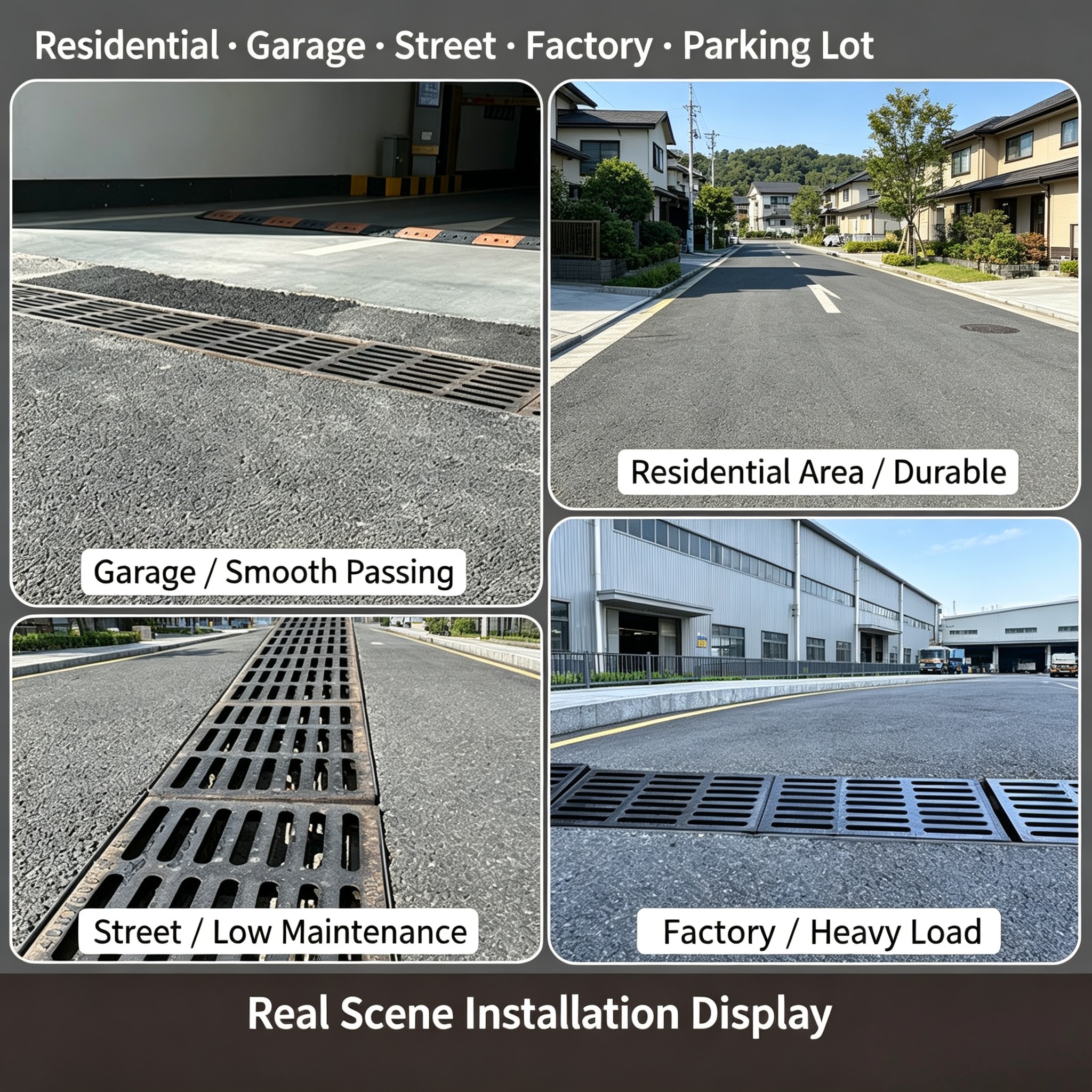
| Repair Situation | Recommended Approach | Key Consideration |
|---|---|---|
| Damaged grate | Replace the grate | Confirm size and load requirement |
| Cracked grate | Replace damaged component | Check frame condition |
| Loose grate | Inspect grate and frame | Check fit and supporting structure |
| Blocked grate | Clean and inspect | Check drainage flow |
| Damaged frame | Repair or replace frame | Confirm frame dimensions |
| Pavement settlement | Repair surrounding structure | Re-level frame before installation |
| Corroded surface | Inspect and evaluate | Consider suitable surface treatment |
| Complete drainage inlet damage | Replace assembly | Match grate, frame, and channel |
Drainage grates can become damaged for several reasons.
Repeated vehicle loading, accidental impact, improper installation, pavement movement, corrosion, debris accumulation, or long-term environmental exposure may affect the condition of an existing grate.
Common problems include:
A cracked or damaged grate may no longer provide the required support or safe surface condition.
In this situation, replacing the damaged grate with a suitable ductile iron drainage grate can restore the drainage inlet.
A grate that moves, rattles, or does not fit properly may indicate a problem with the grate, frame, supporting structure, or installation.
The complete grate-and-frame assembly should be inspected before replacement.
Leaves, dirt, stones, and other debris can block drainage openings and reduce water flow.
Cleaning the grate may solve the problem if the grate itself remains in good condition. If the grate is damaged or heavily worn, replacement may be more appropriate.
Sometimes the problem is not the grate itself. The frame may have moved, or the surrounding pavement may have settled or cracked.
In these situations, replacing only the grate may not solve the underlying problem. The frame and supporting structure should also be inspected.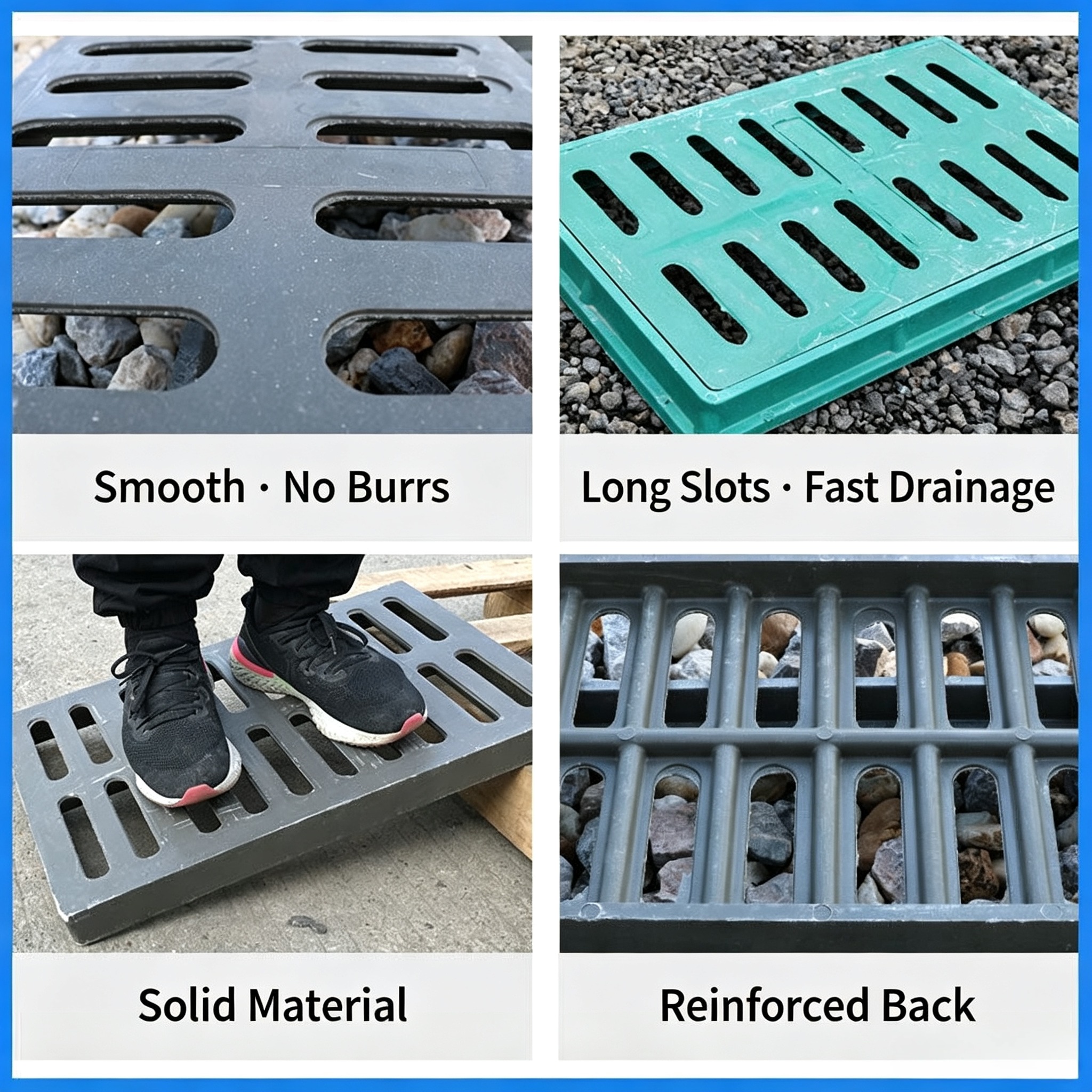
Replacing a drainage grate should be treated as a complete repair process rather than simply placing a new cover over the opening.
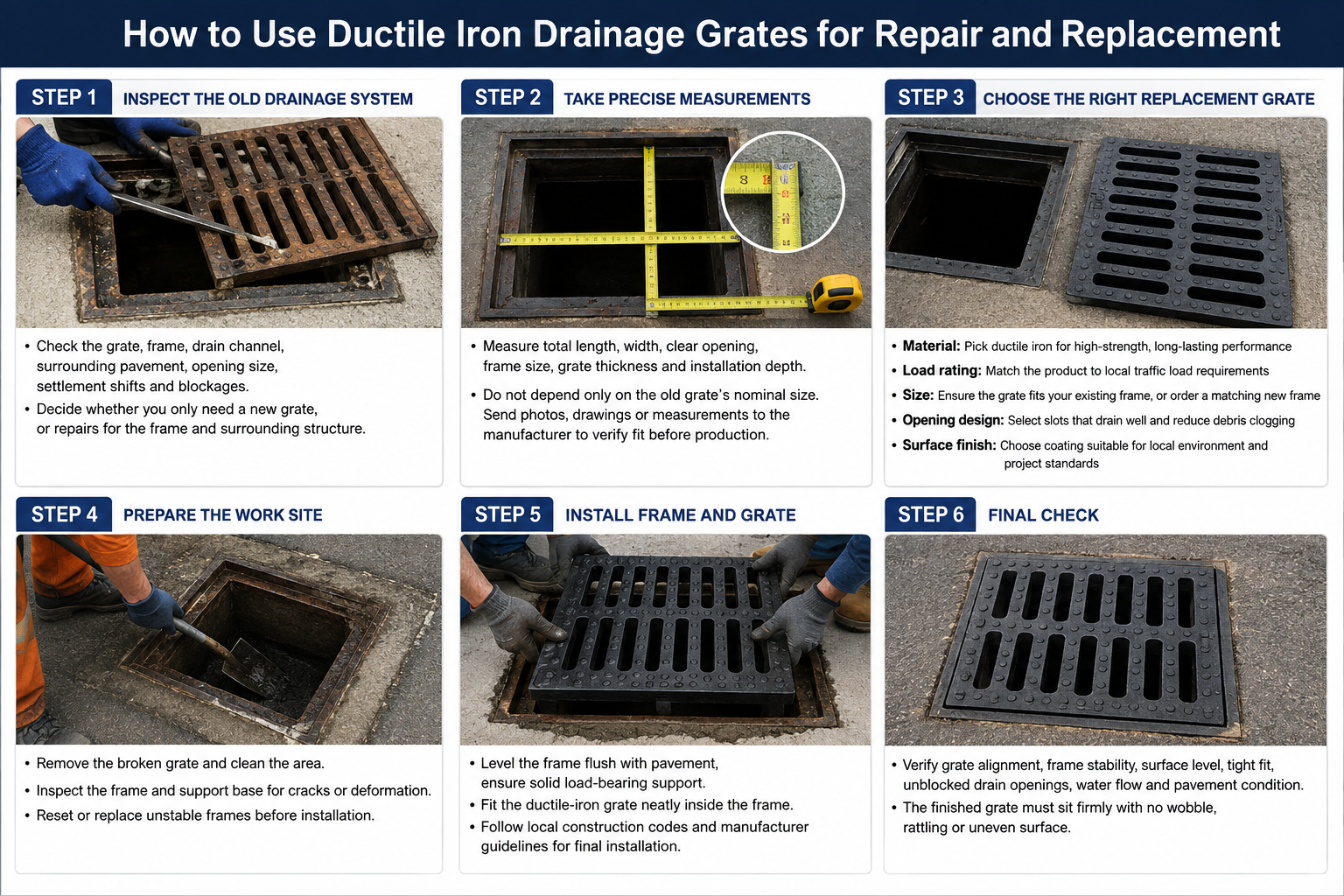
Regular maintenance can help keep drainage systems working effectively.
Remove leaves, dirt, stones, and other debris that may restrict water flow.
Look for visible cracks, deformation, severe surface damage, or other signs of deterioration.
A stable frame is essential for a properly functioning drainage grate. Check for movement, settlement, cracking, or damage around the frame.
Changes in pavement level can affect the fit and stability of the grate.
After heavy rainfall, inspect areas where water tends to accumulate. Poor drainage may indicate blocked openings or problems elsewhere in the drainage system.
Conclusion
Ductile Iron Drainage Grates are used in a wide range of drainage applications, from roads and parking areas to municipal, commercial, and industrial infrastructure.
When a drainage grate becomes damaged, loose, blocked, or worn, the repair process should begin with an inspection of the grate, frame, drainage channel, and surrounding pavement. Correct measurement and product selection are essential for a successful replacement.
For new installations or replacement projects, buyers should consider dimensions, load requirements, frame compatibility, drainage capacity, surface treatment, and applicable standards before placing an order.
Need Ductile Iron Drainage Grates for a repair, replacement, or new drainage project? Send us your dimensions, photos, drawings, application conditions, or quantity for a suitable product recommendation and quotation.
https://www.senruipipe.com/products/ductile-iron-drainage-grates-round,-square-hinged-designs


