
A Pipe Repair Clamp is a mechanical pipe repair device designed to seal localized damage on a pipeline.
Unlike traditional pipe replacement, which may require cutting out the damaged section, welding, or shutting down a large part of the pipeline, a repair clamp is installed around the damaged pipe and tightened with bolts.
A typical pipe repair clamp consists of:
The sealing gasket is positioned around the damaged section of the pipe. When the bolts are tightened, the clamp housing compresses the gasket against the pipe surface, helping create a reliable seal.
Depending on the pipeline and working conditions, repair clamps can be manufactured from ductile iron, stainless steel, carbon steel, or other suitable materials.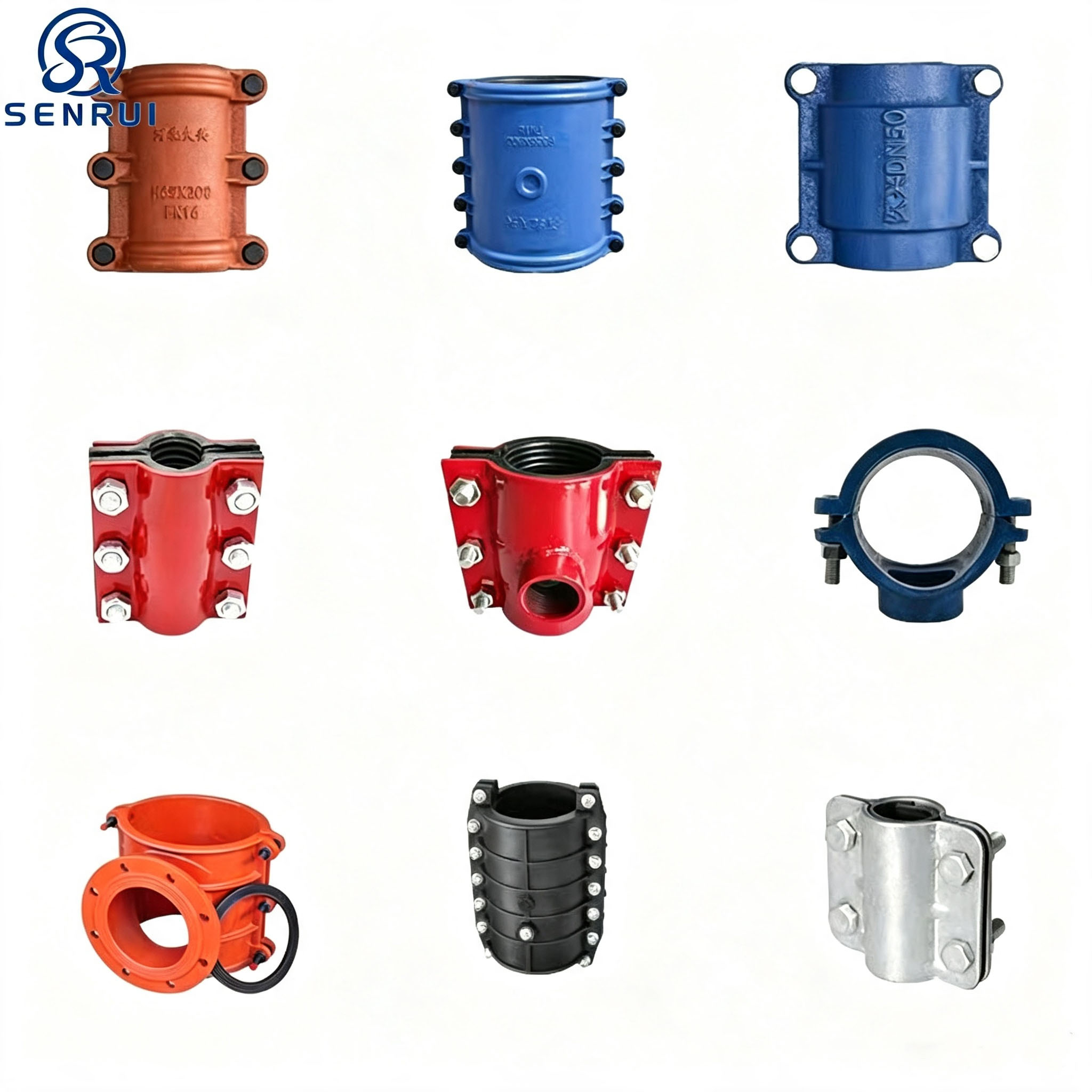
Pipe repair clamps are mainly used for localized pipeline damage and emergency maintenance.
One of the most common applications is repairing a leak on a straight section of pipe.
Damage may result from:
A properly selected straight pipe repair clamp can cover the damaged area and provide sealing without replacing the complete pipe.
Pipeline corrosion can gradually reduce wall thickness and eventually cause leakage.
A repair clamp can be used for certain localized corrosion-related leaks when the remaining pipe structure and operating conditions are suitable.
For heavily damaged or structurally compromised pipes, the pipeline should be evaluated by a qualified engineer before selecting a clamp as a repair method.
Not every pipeline leak occurs on a straight pipe.
Specialized repair clamp designs can be used for different configurations, including:
This allows pipeline maintenance teams to select a repair solution based on the actual location and geometry of the leakage.
When a pipeline suddenly develops a leak, replacing the entire pipe can require significant labor, equipment, and downtime.
A suitable Pipe Repair Clamp provides a faster mechanical repair option for compatible applications.
This is particularly useful in:
The exact suitability depends on pipe material, pipe diameter, operating pressure, temperature, fluid, and the type and extent of damage.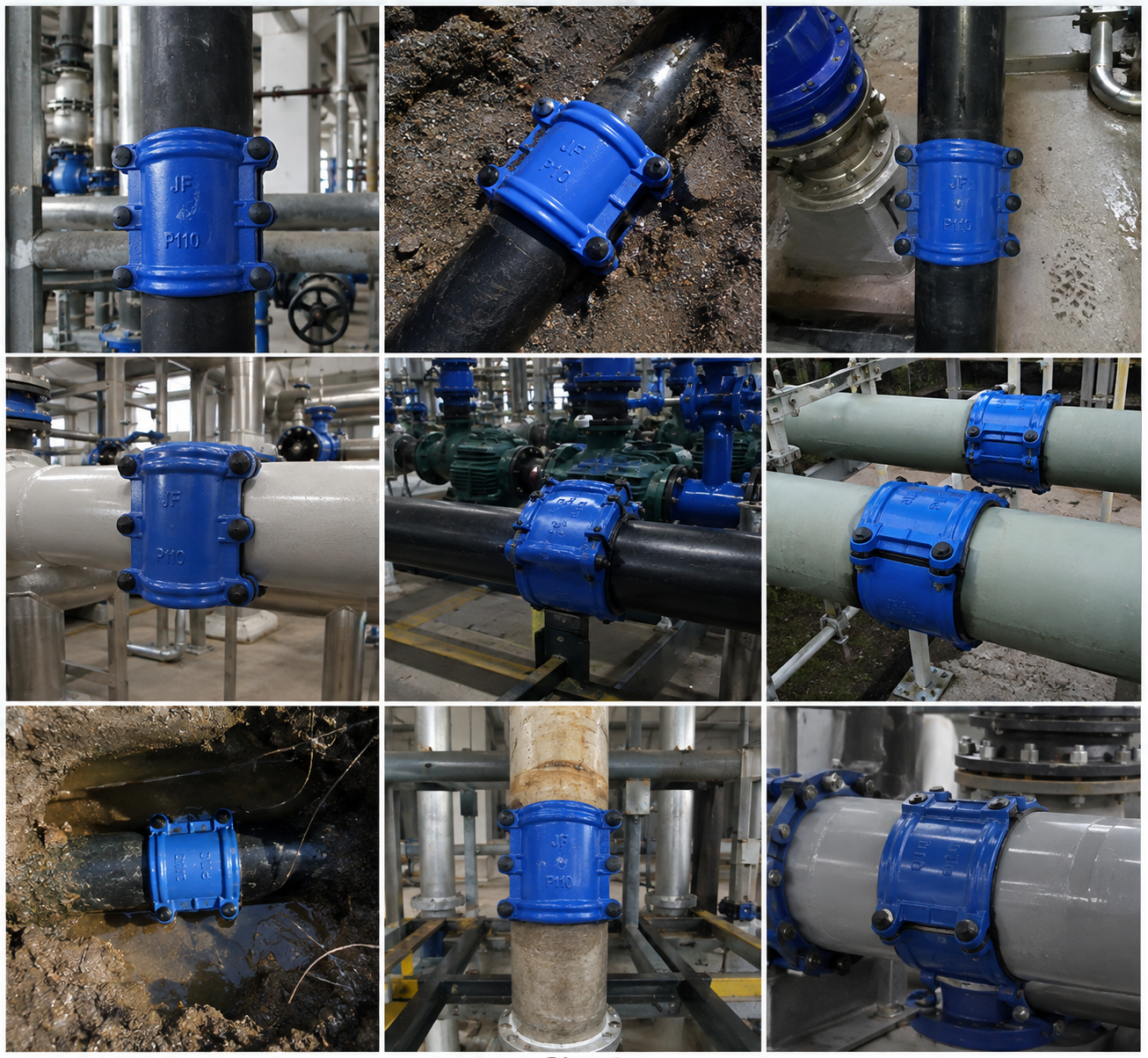
The working principle is relatively simple.
The clamp is placed around the damaged area of the pipe. The internal sealing gasket sits directly over the leakage point. When the bolts are tightened evenly, the clamp housing compresses the gasket against the pipe.
The basic process is:
Damaged Pipe → Position Clamp → Align Gasket → Tighten Bolts → Compress Seal → Check for Leakage
The sealing performance depends on several factors, including gasket material, clamp design, pipe surface condition, bolt tightening, pipe diameter, pressure, and temperature.
For this reason, selecting the correct clamp size and design is critical.
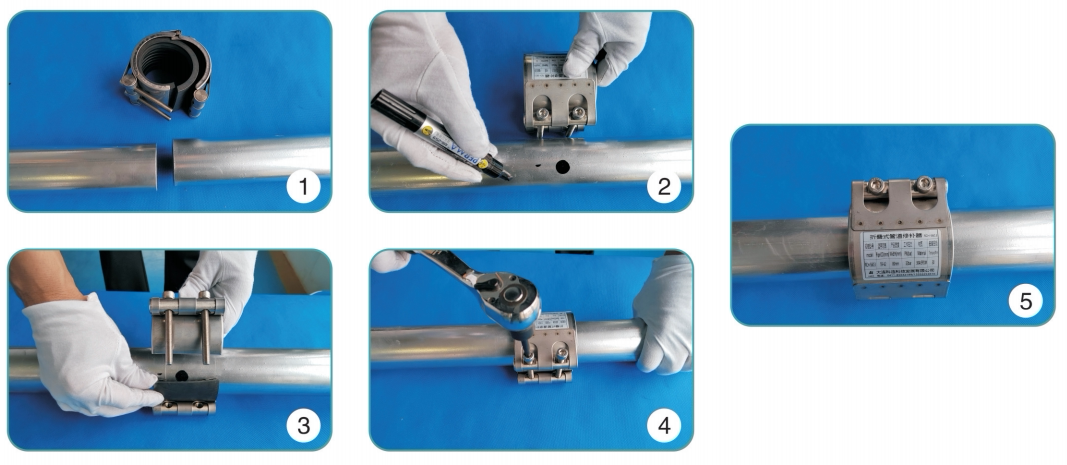
The installation process may vary depending on the specific clamp design, but the general procedure is as follows.
First, locate the leakage and inspect the surrounding pipe.
Check:
The pipe should have sufficient structural integrity for the selected repair method.
Choose a clamp according to the actual pipe dimensions and operating conditions.
Important parameters include:
| Parameter | Why It Matters |
|---|---|
| Pipe Outside Diameter | Determines clamp size |
| Pipe Material | Affects compatibility and sealing |
| Working Pressure | Determines required pressure capability |
| Temperature | Affects gasket and material selection |
| Pipe Configuration | Determines clamp design |
| Damage Type | Determines repair method |
| Gasket Material | Affects sealing performance |
| Clamp Material | Affects strength and corrosion resistance |
For example, a ductile iron pipe repair clamp may be suitable for certain water pipeline applications, while a stainless steel pipe repair clamp can be selected when higher corrosion resistance is required.
Before installation, remove dirt, loose rust, scale, coatings, and other contaminants around the damaged area where practical.
A clean and reasonably smooth pipe surface helps the gasket make proper contact with the pipe.
Do not install a clamp over loose material that could prevent proper sealing.
Place the sealing gasket over the damaged area.
The leakage point should be positioned within the sealing area of the gasket.
Make sure the gasket is properly aligned and is not twisted, folded, or displaced.
Position the clamp housing around the pipe and align the two sides of the clamp.
Insert the bolts and nuts according to the manufacturer's installation instructions.
Tighten the bolts gradually and evenly.
Uneven tightening may cause uneven gasket compression and can affect sealing performance.
For larger clamps or critical applications, the manufacturer's specified tightening sequence and torque should be followed.
After installation, inspect the repaired area for leakage.
Where applicable, the pipeline should be returned to service gradually while monitoring the repaired section.
If leakage remains, stop and inspect the clamp installation rather than simply continuing to increase bolt torque beyond the manufacturer's specified limits.
Different pipeline environments require different materials.
Ductile iron provides a strong and rigid clamp housing and is commonly used for pipeline maintenance applications.
A typical configuration may include a ductile iron housing, EPDM sealing gasket, high-strength bolts, and protective epoxy powder coating.
Stainless Steel Pipe Repair Clamps are designed for applications where corrosion resistance is an important consideration.
They can be used in suitable water, industrial, marine, and other pipeline environments depending on the selected stainless steel grade and sealing material.
Carbon steel repair clamps provide a practical option for industrial applications where strength and cost efficiency are important.
The surface treatment and coating system should be selected according to the operating environment.
Pipe replacement is not always the most efficient solution for localized damage.
A repair clamp can provide several practical advantages:
However, a repair clamp is not a universal replacement for pipe replacement. Severe structural damage, extensive corrosion, unsuitable operating conditions, or damage outside the clamp's design limits may require another repair method.
Before purchasing a Pipe Repair Clamp, buyers should provide as much technical information as possible.
The most important information includes:
1. Pipe Outside Diameter
Accurate pipe OD is essential for selecting the correct clamp size.
2. Pipe Material
Specify whether the pipe is ductile iron, carbon steel, stainless steel, galvanized steel, PE, PPR, PVC, or another material.
3. Pipe Damage
Describe whether the problem is a straight pipe leak, corrosion, crack, pinhole, flange leakage, elbow leakage, tee leakage, or another type of damage.
4. Working Pressure
The repair clamp should be suitable for the actual pipeline operating pressure.
5. Operating Temperature
Temperature can affect gasket and sealing material selection.
6. Pipeline Medium
Water, oil, gas, chemicals, and other media may require different sealing materials and construction.
Providing these specifications allows the manufacturer to recommend a more suitable repair clamp.
Pipe repair clamps are used across a wide range of pipeline maintenance scenarios.
| Application | Typical Repair Solution |
| Water Supply | Ductile Iron / Stainless Steel Repair Clamp |
| Industrial Pipeline | Carbon Steel / Stainless Steel Repair Clamp |
| Corroded Pipe | Corrosion-resistant Repair Clamp |
| Straight Pipe Leakage | Straight Pipe Repair Clamp |
| Elbow Leakage | Elbow Repair Clamp |
| Tee Leakage | Tee Repair Clamp |
| Flange Leakage | Flange Repair Clamp |
| Different Pipe Diameters | Reducer Repair Clamp |
| PVC / PPR Pipeline | Suitable PVC/PPR Repair Clamp |
The actual product selection should always be based on the pipeline's technical requirements.
A Pipe Repair Clamp provides a practical mechanical solution for localized pipe leakage, corrosion damage, cracks, and other compatible pipeline problems. Its main advantage is the ability to repair certain damaged areas without replacing the entire pipe section.
From ductile iron pipe repair clamps to stainless steel pipe repair clamps, different designs and materials can be selected for different pipeline environments.
For the best repair performance, users should consider pipe diameter, pipe material, damage type, working pressure, temperature, pipeline medium, and gasket compatibility before installation.
For emergency maintenance and industrial pipeline repair, choosing the right Pipe Repair Clamp can help reduce repair time, simplify installation, and keep pipeline systems operating efficiently.
Need a Pipe Repair Clamp for your project? Send us your pipe outside diameter, pipe material, working pressure, and damage type for a suitable solution and quotation.


